On an autumn afternoon in London, I walked through Battersea Park, came out on the Thames and followed the river east to Battersea Power Station. It’s a short route, but it takes in a Victorian park, two very different river crossings and one of the city’s great industrial landmarks.

A short history of Battersea Park and the Power Station
Battersea Park stands on what were once Battersea Fields, low marshes where market gardeners grew carrots, melons, lavender and asparagus. An Act of Parliament cleared the way for a public park in 1846, and Queen Victoria formally opened it in 1858. Today, the Grade II* listed park covers about 200 acres, with a boating lake, gardens, sports grounds and a Peace Pagoda by the river.
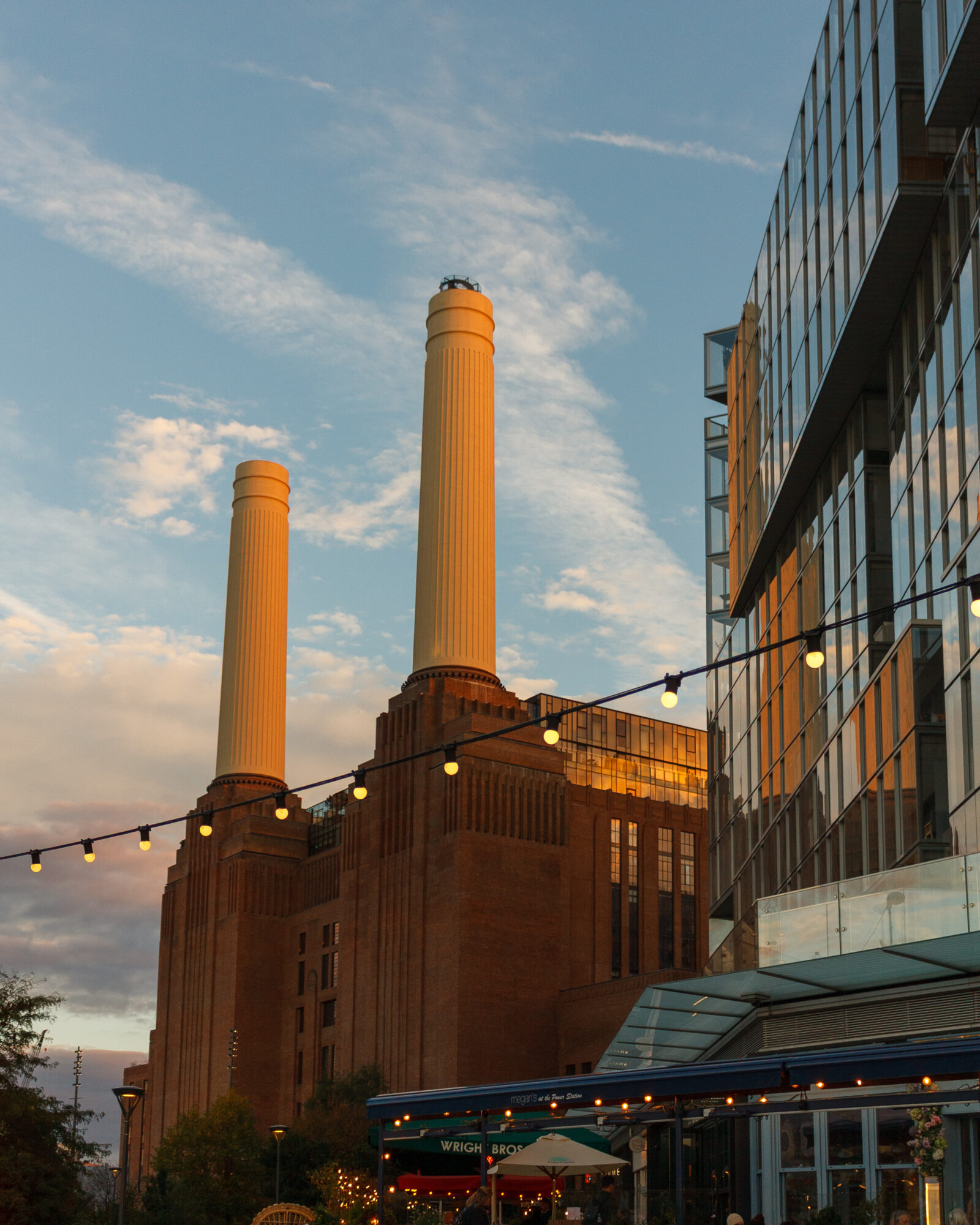
Battersea Power Station came much later. Construction began in 1929, and the first electricity flowed in 1933. Protests against its size and pollution led the London Power Company to bring in Sir Giles Gilbert Scott, designer of the red telephone box, for the exterior. A nearly identical second station followed in the 1950s, creating the familiar four-chimney outline.
At its height, the site supplied a fifth of London’s electricity. The two stations closed in 1975 and 1983, and the listed building then stood empty for decades as one redevelopment plan after another failed.
The Power Station finally opened to the public on 14 October 2022 and now holds homes, offices, shops and restaurants, as well as the Chimney Lift, a glass lift to the top of the north-west chimney.
Along the river
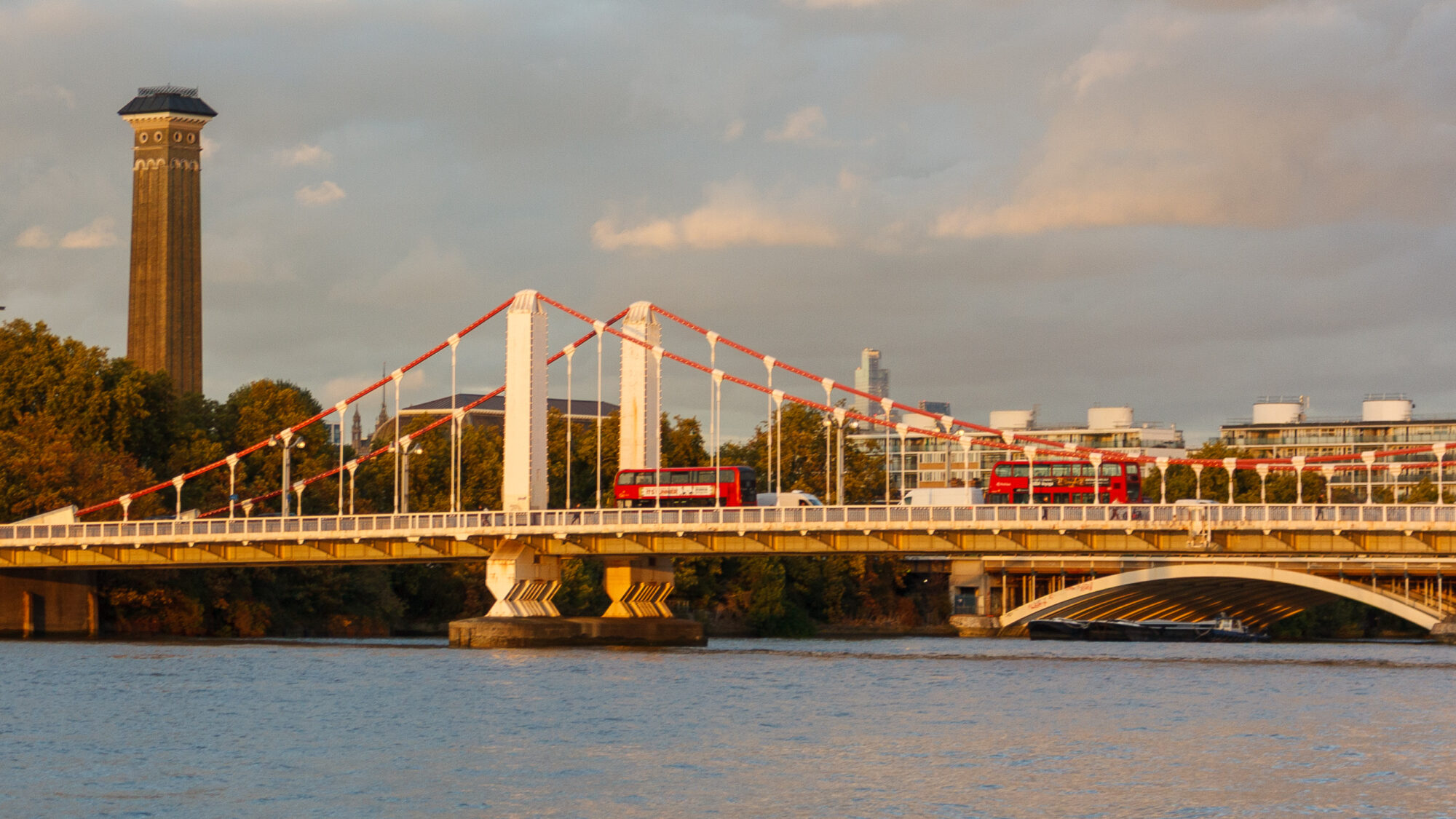
From the park, I followed the riverside east, with Chelsea on the opposite bank. The route soon led past Chelsea Bridge and then Grosvenor Bridge, which carries the railway into Victoria.
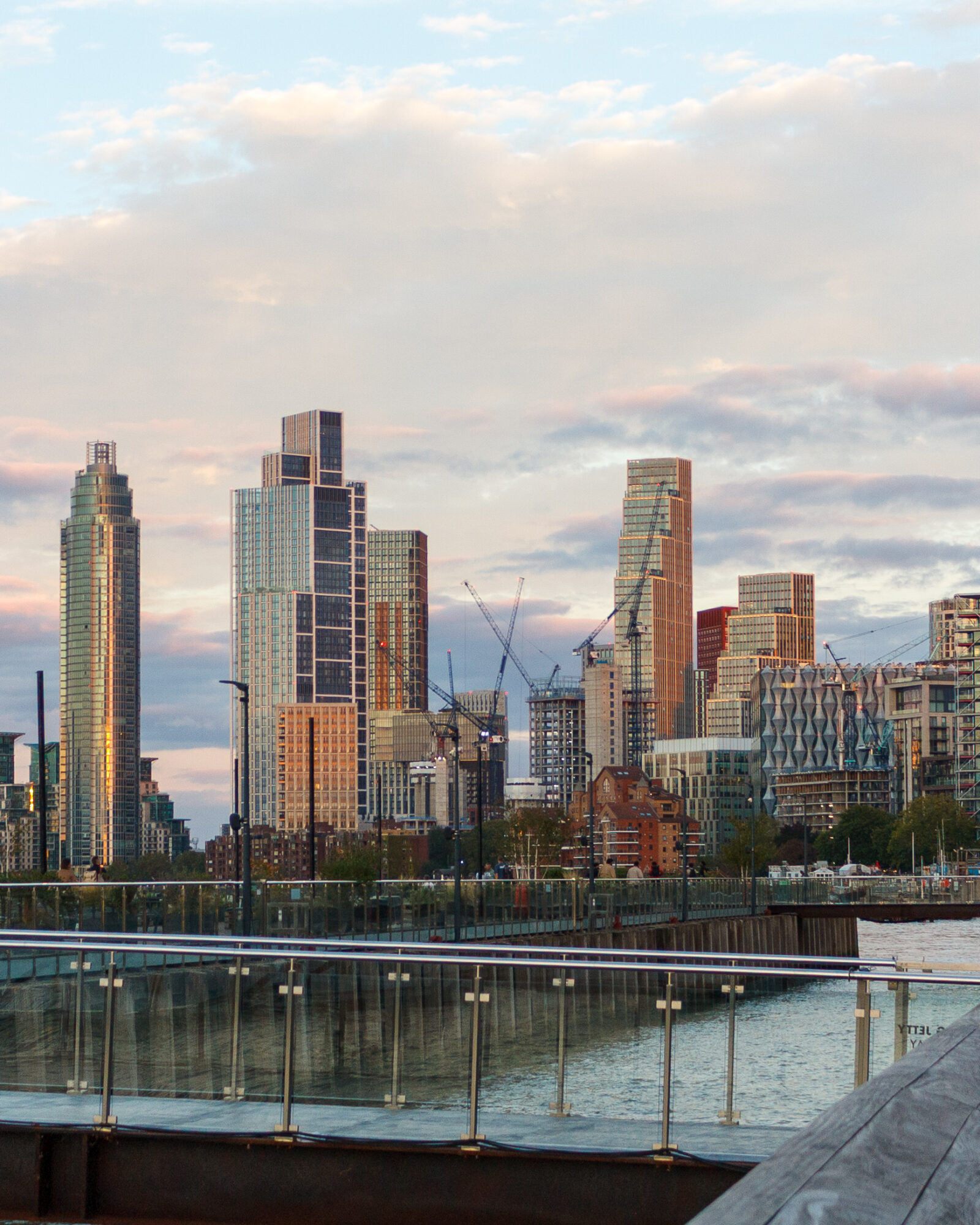
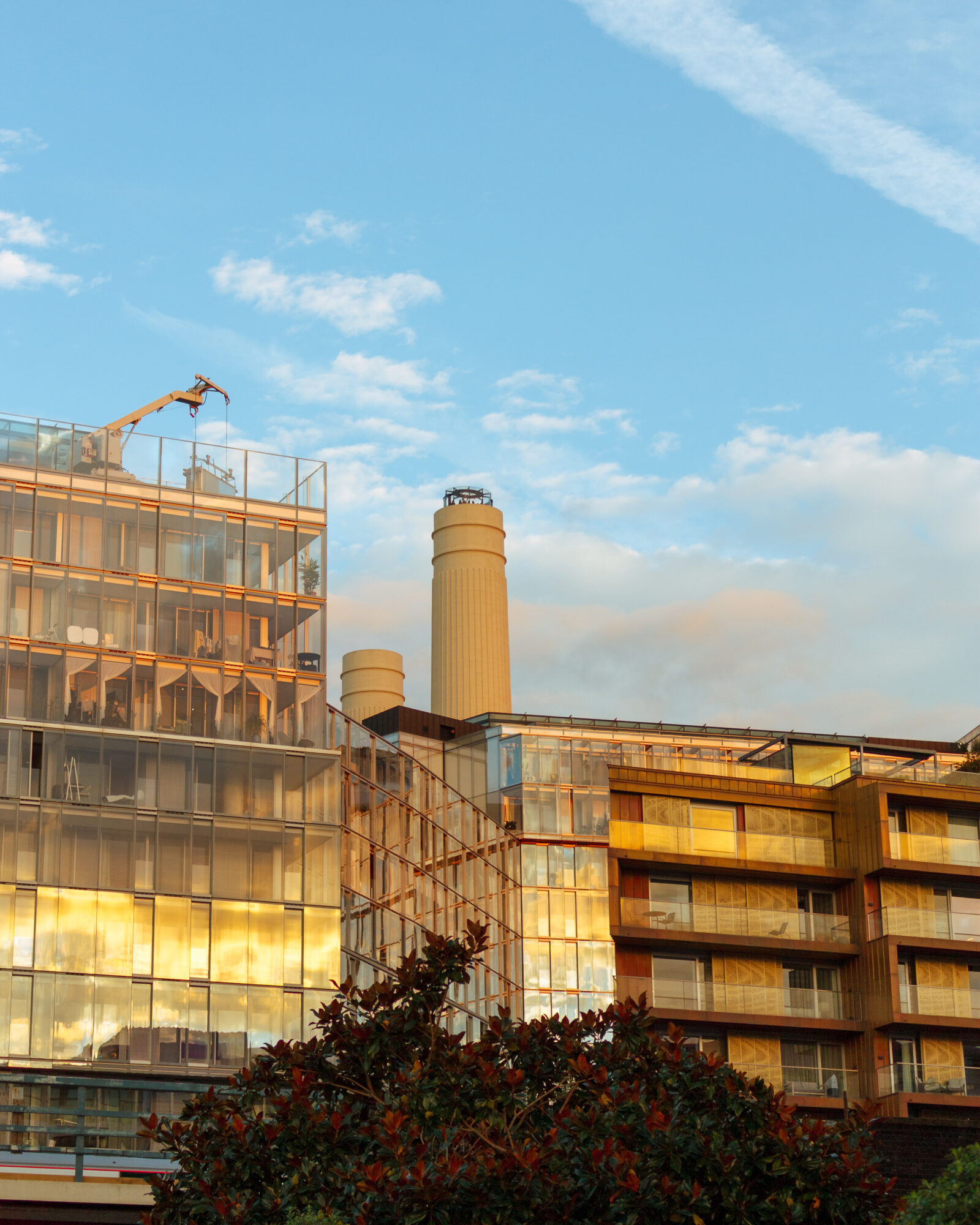
What made the walk was the evening light. The clouds glowed yellow and orange, and the low sun was reflected in the glass façades of the towers. The city views are remarkable, with large buildings rising in the background all along the river.
Beyond the bridges, the path led on to the new neighbourhood around the Power Station. I was especially fascinated by the interplay between the restored brick building, with its rebuilt chimneys, and the glass and copper of the modern blocks around it. I wandered past the restaurants at the foot of the chimneys and finished back by the water, looking along the Thames towards Vauxhall and Nine Elms.

— All photos from this set are on my portfolio.

Leave a Reply